
We Built This Because Civilian Carry Was Broken
Where It Started
Gunpant was founded by Jason, a 100% disabled United States Air Force veteran who served as a Pararescueman from 1991 to 1995. During his service he deployed multiple times to the Gulf region — operating in Saudi Arabia, Kuwait, and Iraq during a period when threats to U.S. personnel in that area were very real. In that environment, he found that carrying side-leg suited his role — natural, functional, and something he could rely on.
Back in civilian life, years removed from service, Jason took a hard look at how people actually carry day to day. Not soldiers. Not operators. Regular people — going to work, running errands, picking up their kids — carrying a firearm the way the industry told them to. What he saw didn't add up.
The Problem With How Civilians Carry
The concealed carry industry has largely sold civilians a military and law enforcement mindset. Quick draw. Round chambered. Holster locked. Practice your draw until it's muscle memory. The message is: be ready to react at a moment's notice.
The problem is that most civilians will never be in that moment. Statistics bear this out — even police officers, who face far greater risk than the average person, rarely ever fire their weapon in the line of duty. For a civilian going about their day, the likelihood of needing to fire a weapon is extraordinarily low.
What that means in practice is that most people are carrying uncomfortable setups — tight waistbands, printing anxiety, awkward sitting positions — for years, possibly decades, before that firearm is ever needed. And if it's uncomfortable enough, they stop carrying altogether. A firearm left at home protects nobody.
The Issues Nobody Was Talking About
Beyond comfort, Jason saw deeper problems with the standard civilian carry approach. Hip carry in a concealed state means your hand can't approach the firearm without revealing your intent — you have to wait until a threat fully presents before you can move. That's a tactical disadvantage that most people don't think about until it's too late to matter.
Then there's the chambered round. In a military context, it makes sense. In civilian daily life, it's a liability. Modern firearms have had their trigger pull weights reduced significantly — some as low as 3.5 pounds or less, compared to the 8–10 pound pulls of older designs. Combined with a live round in the chamber, the margin for error shrinks considerably.
Jason saw this play out socially too. Friends showing off a new firearm, dropping the mag, racking the slide to eject the hot round before handing it over — a small ritual that exists specifically because carrying chambered around other people creates a real safety concern. And those same friends had kids at home. The firearm comes off the hip at the end of the day and ends up on the nightstand — in its holster, maybe — but accessible to a curious child in a way that a firearm without a chambered round simply isn't.
What We Built Instead
Gunpant is the answer to all of it. A purpose-engineered side-leg carry system built directly into the garment — no holster, no hardware, no external giveaways. The firearm sits naturally along the outer thigh, the same position Jason carried in the Air Force, stabilized by a four-point pocket geometry engineered for sitting, driving, and everything else a normal day involves.
The side-leg position means your hand can approach your firearm naturally, without telegraphing intent. It means all-day comfort that doesn't make you want to leave it in the car. And it's designed around the reality of civilian carry — where the goal isn't combat readiness, it's quiet, consistent presence.
Two patents have been filed with the USPTO. The process takes time — typically two to three years — but the system is protected. This isn't an accessory. It's a new category of carry, and Gunpant invented it.
Jason — Founder, Gunpant Inc. · USAF Pararescueman, 1991–1995 · 100% Disabled Veteran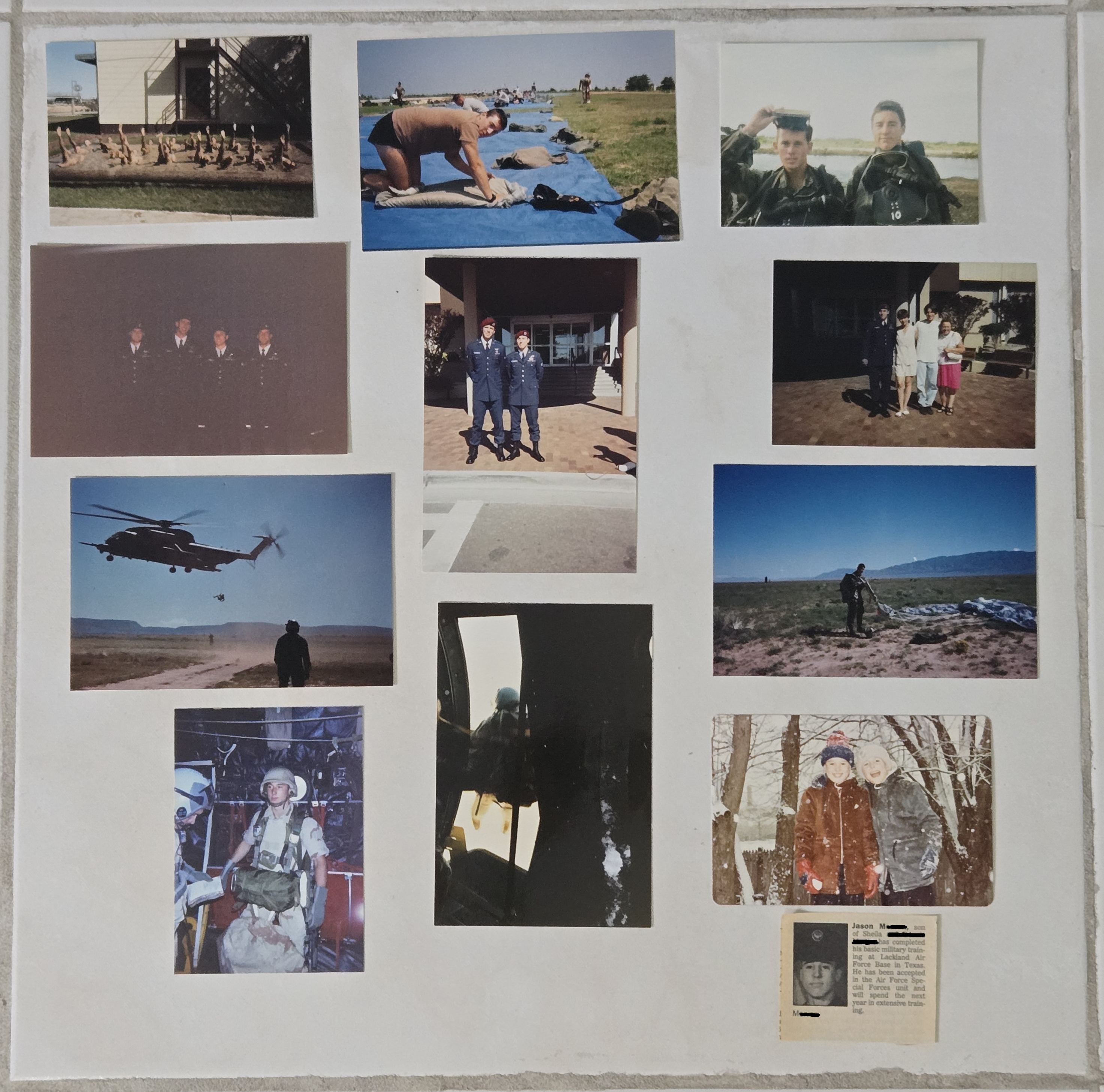
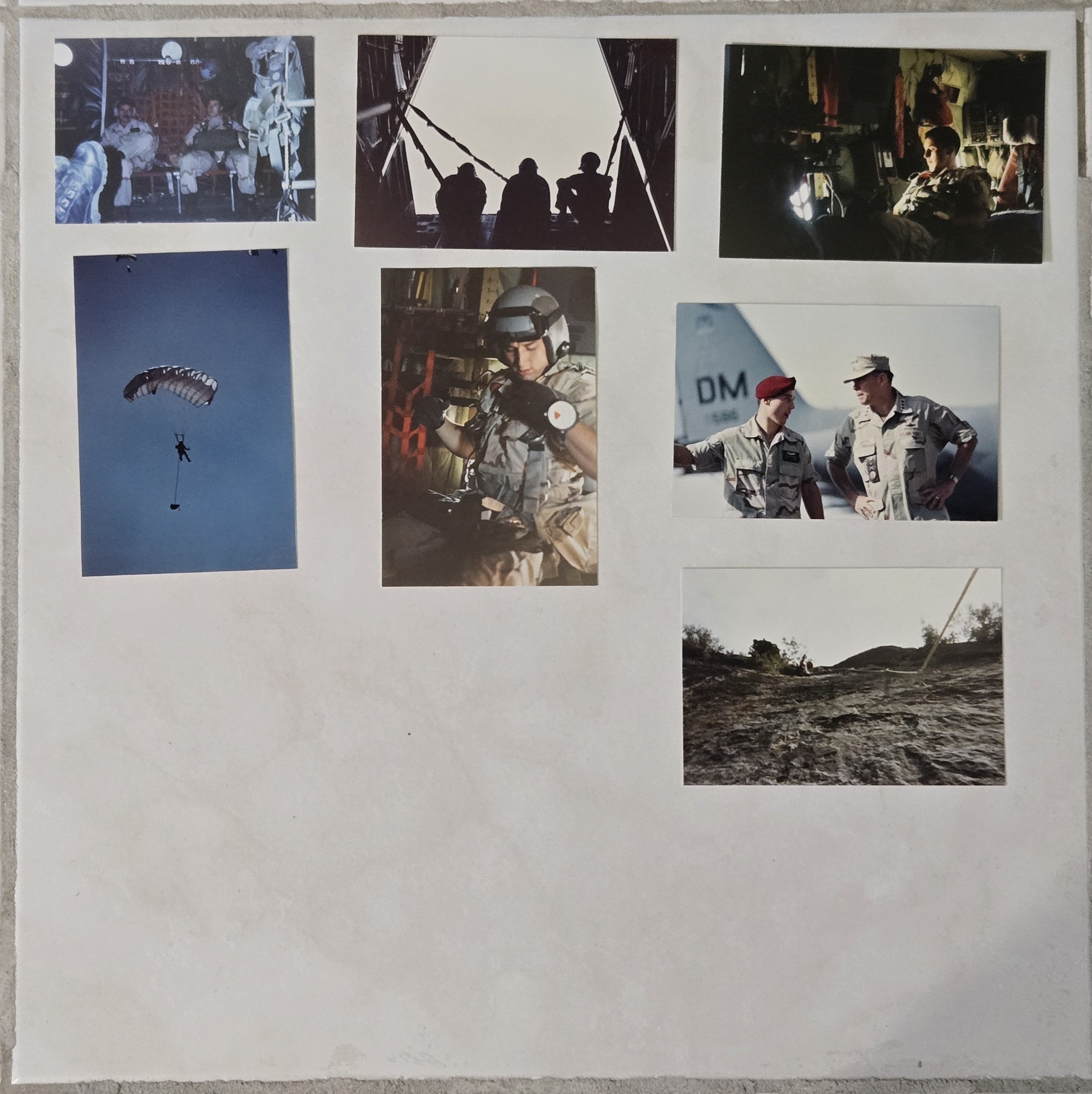
Jason during his years serving as a USAF Pararescueman, 1991–1995.