Side-Leg vs. Appendix vs. Pocket Carry — An Honest Comparison
Most carry position comparisons have an agenda. They're written to justify whatever the author already uses. This one doesn't — each position has genuine strengths and real limitations, and the best choice depends on your life, not on what's popular in the training community this year.
Here's an honest look at all three.
Appendix Carry (AIWB)
What it does well: In a standing position, appendix carry offers fast access and strong concealment under an untucked shirt. The firearm is in front of the body and easy to monitor. It works well for people who spend most of their day standing or moving and dress in ways that accommodate it — loose, longer shirts, casual clothing.
Where it fails: Seated positions are the core problem. The appendix position is at the body's main fold point — the hip crease. Sitting for extended periods puts the grip against the lower abdomen and positions the muzzle toward the upper thigh or groin. Drivers, desk workers, and anyone in meetings for hours will feel this. Printing through fitted or lighter clothing is also more challenging than most appendix advocates acknowledge — the grip outline appears at the front of the body, directly in the sightline of anyone facing you.
Best suited for: People who are on their feet most of the day, dress in casual clothing with cover garments, and prioritize standing access above seated comfort.
Pocket Carry
What it does well: Pocket carry has the best concealment in casual clothing. A hand in a pocket looks completely natural. There's no hardware, no holster visible at the waistband, and the hand rests in a position that's already close to the firearm. For small firearms in loose cargo or relaxed-fit pants, it can work reasonably well.
Where it fails: Standard pockets weren't designed for carry. They collapse under weight, the firearm rotates freely with no consistent orientation, and access requires fishing for a grip rather than a direct entry. Printing through lighter fabrics is worse than most people expect — the rectangular outline of a compact handgun is distinctive in a relaxed front pocket. Seated access is also awkward: getting into a front pocket while buckled in a car seat requires a specific movement that isn't natural under stress.
Best suited for: Backup carry, very small firearms (pocket pistols, .380s), casual dress where other options aren't available, or as a supplementary option rather than a primary carry method.
Side-Leg Carry
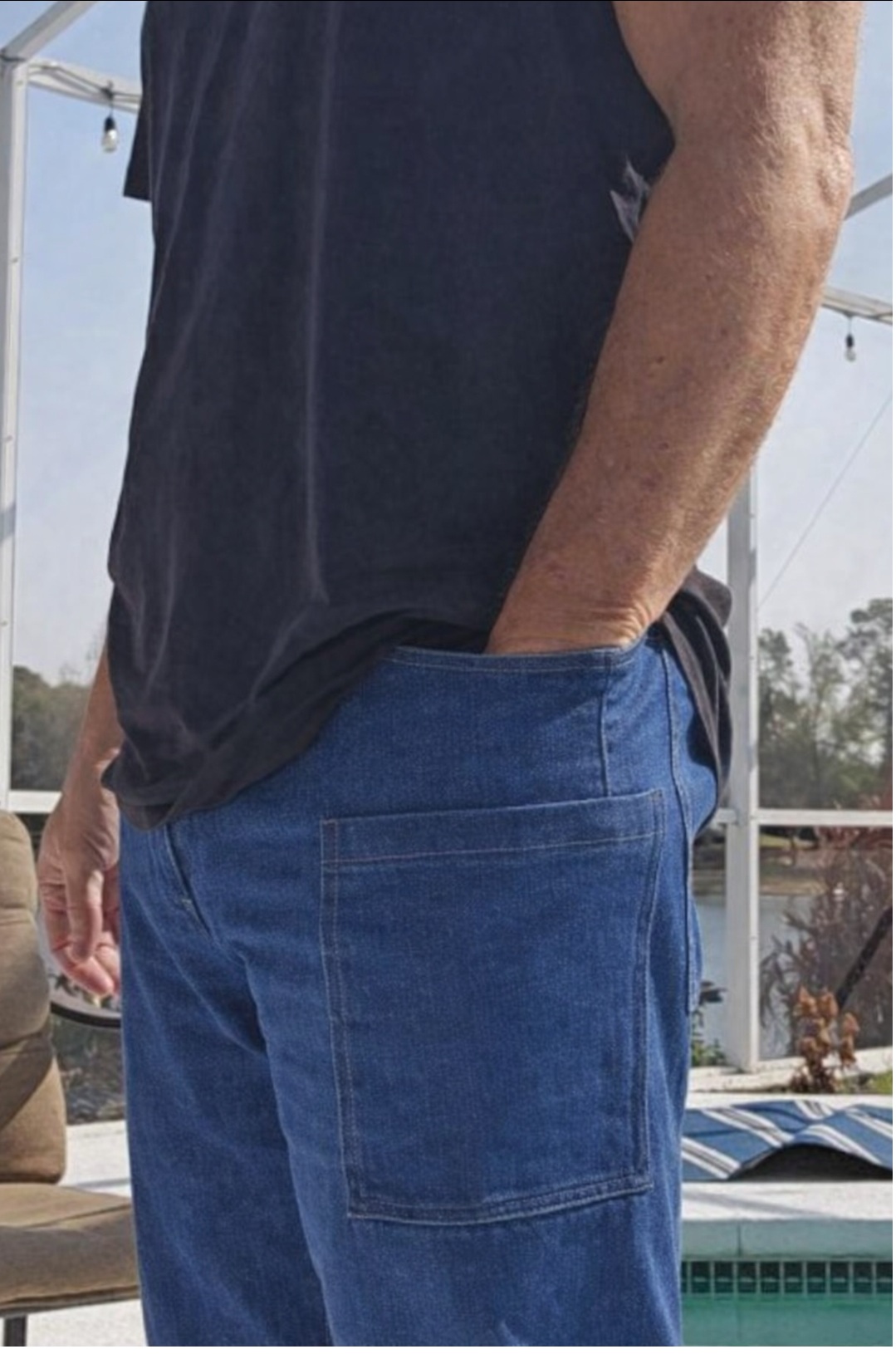
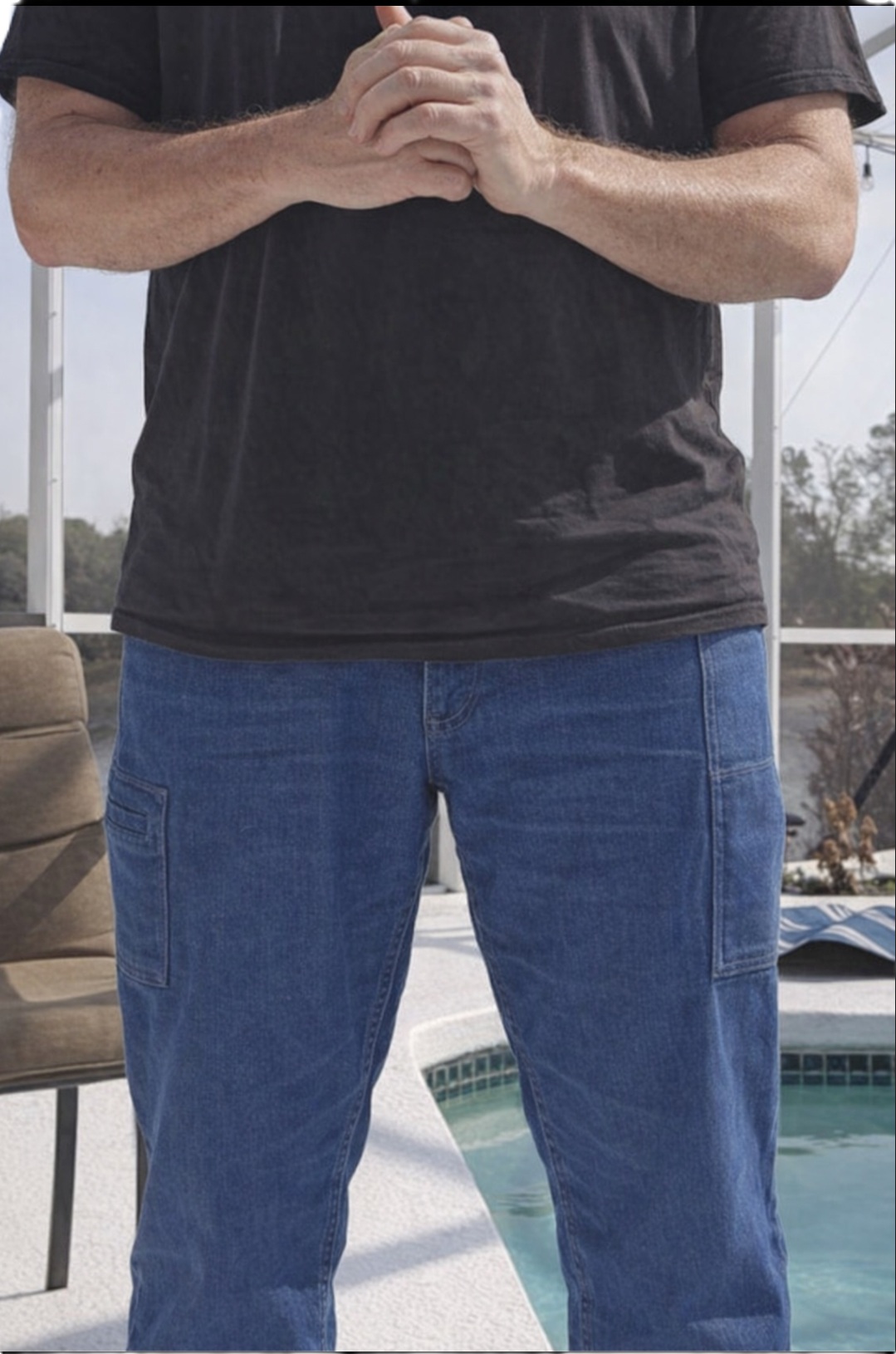
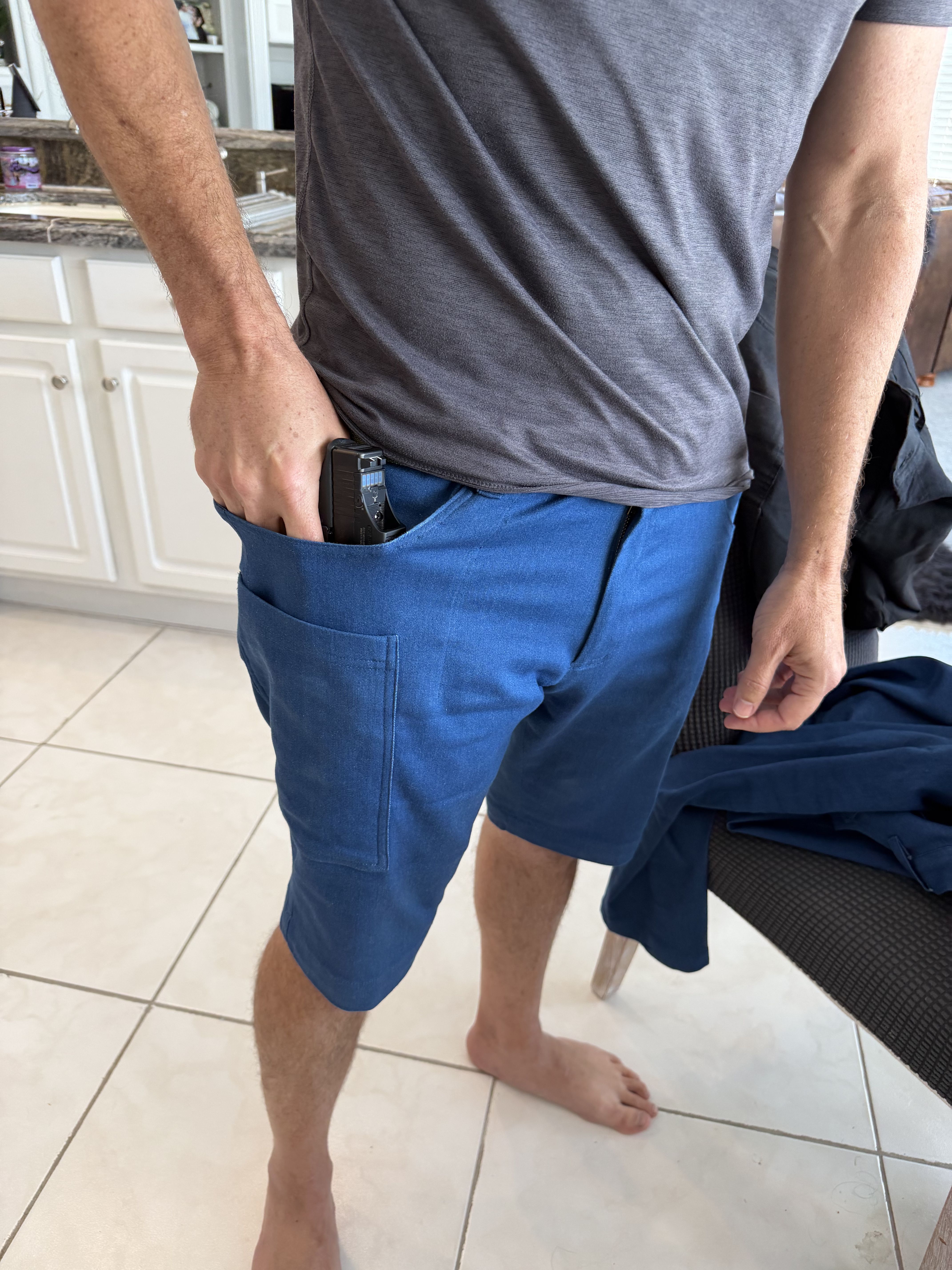
What it does well: The outer thigh is the most stable part of the lower body during daily movement — it doesn't fold when seated, doesn't compress against a seatbelt, and moves in a predictable arc that keeps a carried object consistently oriented. The hand rests naturally at the outer thigh, so access starts from a neutral arm position rather than a deliberate reach. A pocket integrated into the outer seam of a garment carries no external hardware and creates no outline through the clothing above it.
Where it fails: Access from specific constrained positions — lying down, deep in a vehicle seat — requires more movement than appendix carry. It requires garments specifically designed for the purpose: the pocket architecture needs to be engineered into the clothing, not improvised from a standard pants pocket. Compatibility with firearms requires that the area in front of the trigger guard and along the lower barrel is clear — weapon lights and rail-mounted accessories preclude using the four-point catch geometry correctly.
Best suited for: People who sit for significant parts of the day, office and professional environments, warm-weather carry in shorts, drivers, and anyone who finds waistband-based carry consistently uncomfortable over the course of a full day.
The Honest Verdict
No single position is universally best. Appendix carry is genuinely good for specific lifestyles and dress styles — it's popular for real reasons. Pocket carry has a legitimate role for small firearms and casual settings. Side-leg carry solves a specific, common problem: all-day comfort across the full range of daily positions, without external hardware, in clothing that looks normal in any environment.
The right question isn't which position is best in the abstract. It's which position you'll actually use consistently — across all your days, not just the good ones.