Why Traditional Concealed Carry Fails — And Why It's Not Your Fault
If you've ever carried IWB for a full day and found yourself adjusting, shifting, or just taking it off by 2pm — you're not doing it wrong. The method is wrong.
Traditional concealed carry positions were designed around the holster, not the human carrying it. Nobody sat down and asked what a comfortable, practical all-day carry position would look like for someone with a desk job, a commute, and a life that involves sitting in chairs for eight hours. They adopted positions that worked for open carry in a standing posture and then tried to make them work for everything else.
They don't.
The Waistband Is the Wrong Place
The waistline is the most dynamic region of the body. Every step shifts your hips. Every time you sit, the abdominal area compresses. Every time you twist, the fabric at your waist stretches and pulls differently. A firearm at your waistband is attached to all of that movement — it shifts, prints, digs in, and creates pressure points that get worse over the course of a day.
IWB (inside-the-waistband) puts the grip against your skin or undershirt and the barrel pressing into your hip or lower abdomen. Sit in a car for an hour and tell us that's a comfortable system. Appendix carry is worse when seated — the firearm is positioned exactly where your body folds in half. Small-of-back carry requires a reach that isn't natural for most people and becomes nearly impossible from a seated position with a seatbelt on.
Pocket Carry Isn't the Answer Either
Front-pocket carry solves some of the waistband problems and creates new ones. Standard pockets weren't designed to hold a firearm. They collapse under weight, allow the firearm to rotate freely, and the forward position means your hand has to reach across your body to access it naturally. The result is printing that varies unpredictably based on how you're sitting, standing, or moving.
A pocket that's not engineered for carry is just a bag attached to your pants. It holds things. It doesn't position them.
The Real Cost of Discomfort
Here's what actually happens when carry is uncomfortable: people stop carrying. Not all at once — gradually. First you leave it home on casual days. Then on hot days. Then on days when you're just running quick errands. Before long, the firearm is in a drawer more often than it's on you.
That's the real safety failure. Not poor draw technique. Not the wrong holster material. The gun that stayed home because the carry method made it too miserable to bother.
What a Carry System Should Actually Do
A carry system that works for real life needs to stay comfortable whether you're standing, sitting, driving, or bending — keep the firearm in a consistent position without manual adjustment — not create pressure points over the course of a full day — allow a natural hand position at rest — and disappear into normal clothing without requiring a cover garment.
The waistband fails most of these. That's not a design flaw you can adjust your way out of. It's a consequence of putting a load-bearing object in the most movement-heavy part of your body.
Side-Leg Carry Was Designed for This Problem
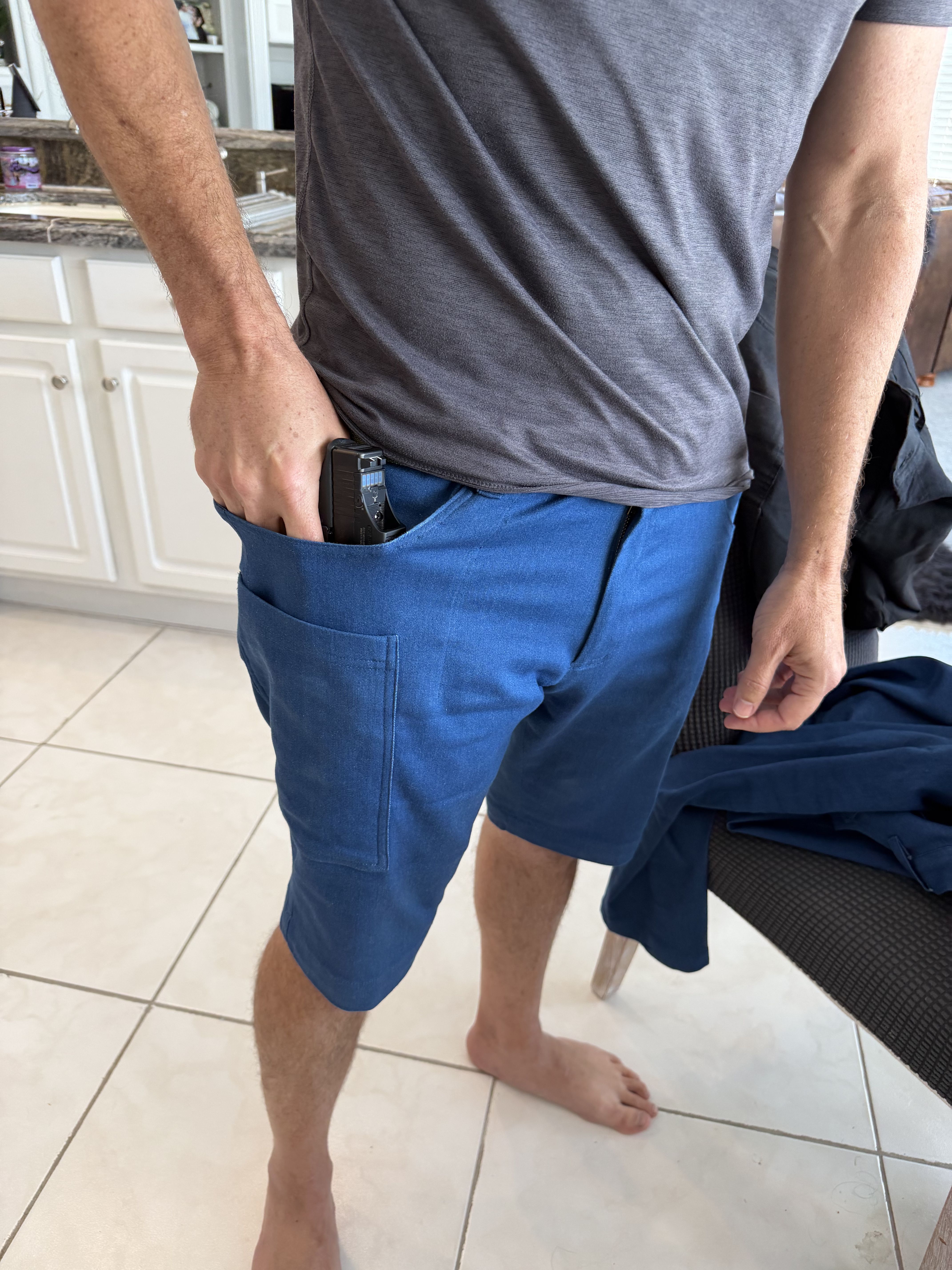
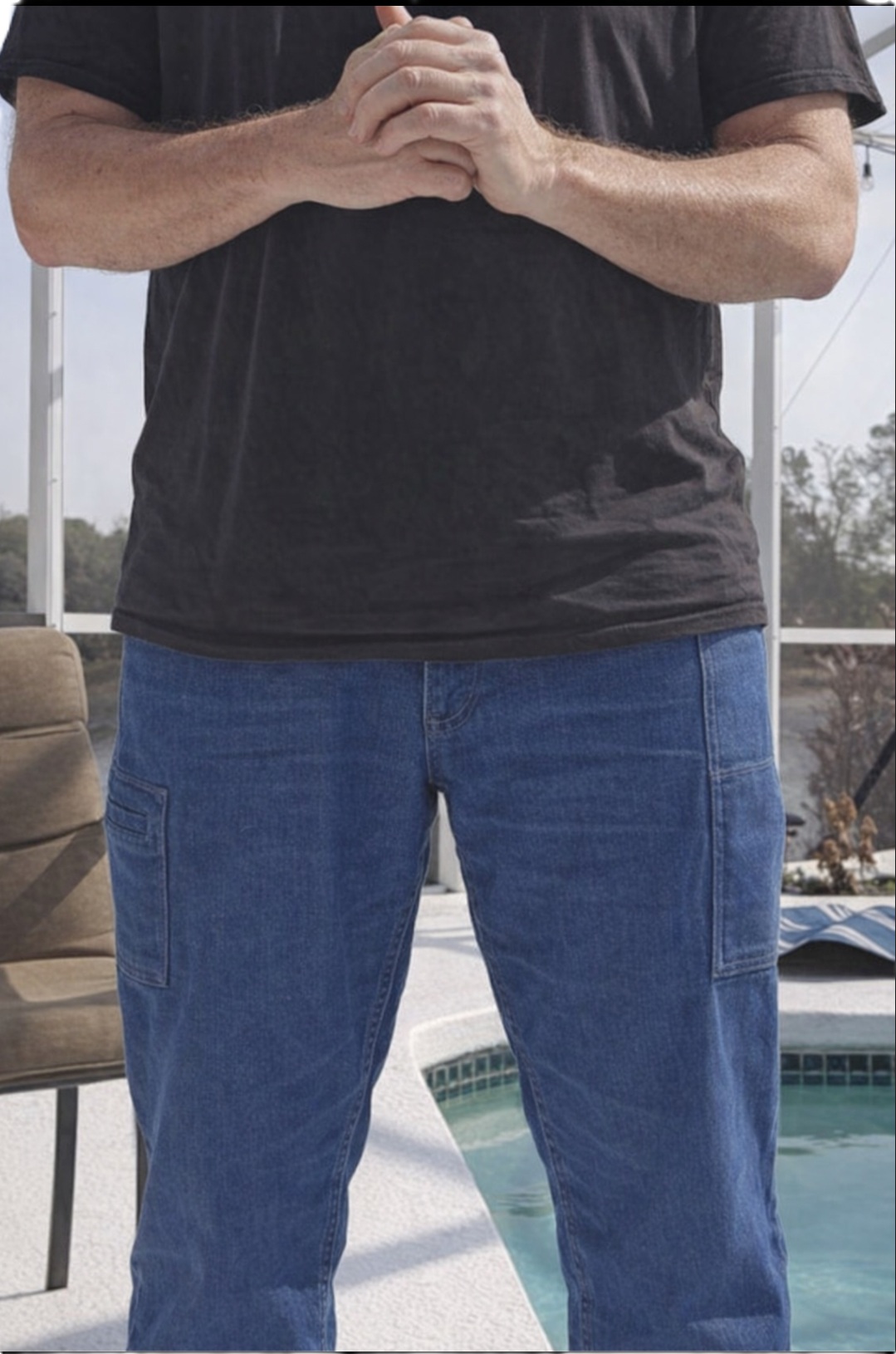
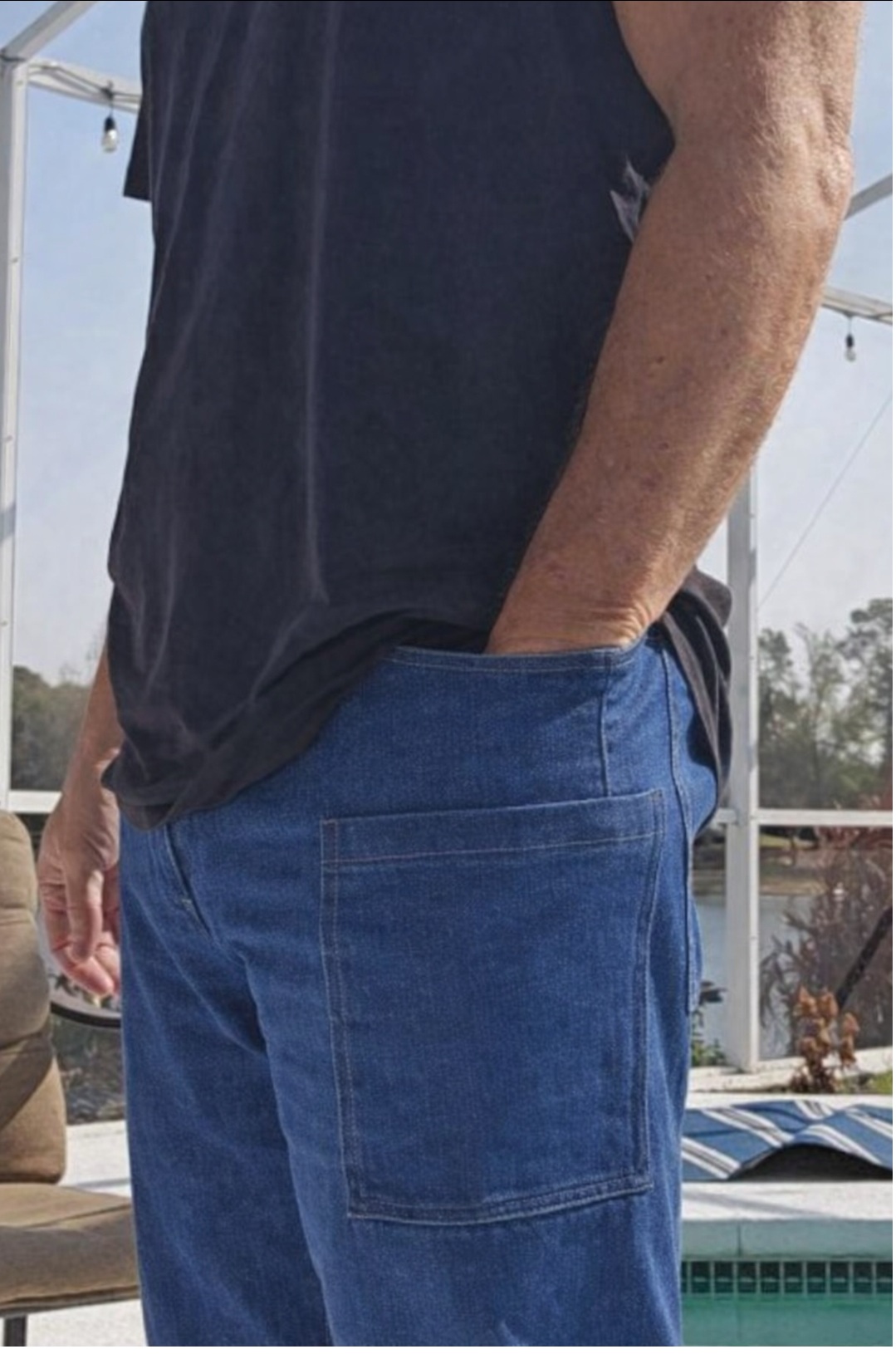
The outer thigh is stable, low-compression, and where your hand already rests when your arm is at your side. A pocket engineered into that location — with the right opening, the right internal geometry, and anchored properly to the garment — satisfies every one of those requirements.
That's why side-leg carry isn't just a different placement. It's a different starting assumption: that the person carrying this thing has a full day to get through, and comfort isn't a luxury — it's what keeps the firearm on them instead of in a drawer.