Why Your Carry Setup Fails the Moment You Sit Down
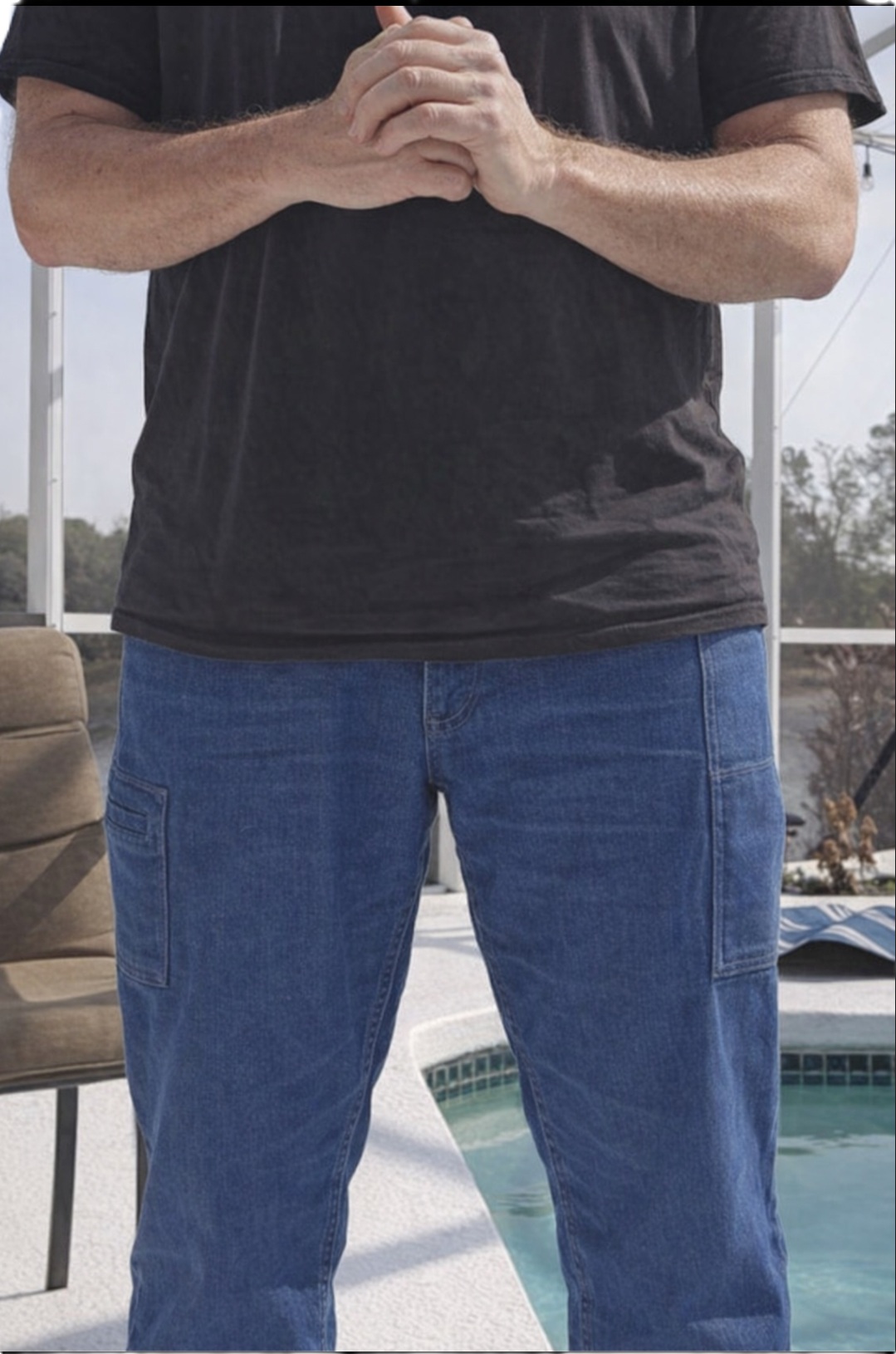
Most concealed carry demonstrations happen standing up. The instructor is standing. The holster advertisement shows someone standing. The whole industry evaluates carry gear from a standing posture.
You spend maybe 20% of your day standing.
The rest of the time you're sitting at a desk, sitting in a car, sitting at a table, or transitioning between those states. And that's exactly when traditional carry breaks down.
What Happens When You Sit
When you sit down, your hip flexors engage and your pelvis tilts. The waistband — and anything attached to it — is now in a compressed, folded zone. IWB holsters get pressed into your hip or abdomen. Appendix carry positions the firearm directly against the crease of your hip, which is where your body bends. Small-of-back carry becomes something you're sitting on top of.
None of this is comfortable. And it doesn't get better — it gets worse over the course of a day as the pressure accumulates.
The Car Problem
Driving is where traditional carry fails hardest. In a seated driving position, the seatbelt crosses exactly where most waistband holsters sit. Appendix carry in a car seat often positions the firearm in the one area with the least clearance. The setup is either visibly uncomfortable or requiring adjustment every time you get in.
Most regular carriers have a ritual: adjust before getting in, adjust after getting out. Some take it off entirely for long drives. That's not a carry system — that's a carry system with a large asterisk attached.
The Bending Problem
Reaching across a table. Picking something up off the floor. Leaning into a back seat. Every forward movement changes the geometry of waistband carry. The firearm can shift, print through clothing, or dig into a soft-tissue area that wasn't being compressed a moment ago. Concealment that works standing but fails when you move is not concealment — it's a best-case-scenario arrangement.
The Outer Thigh Doesn't Have These Problems
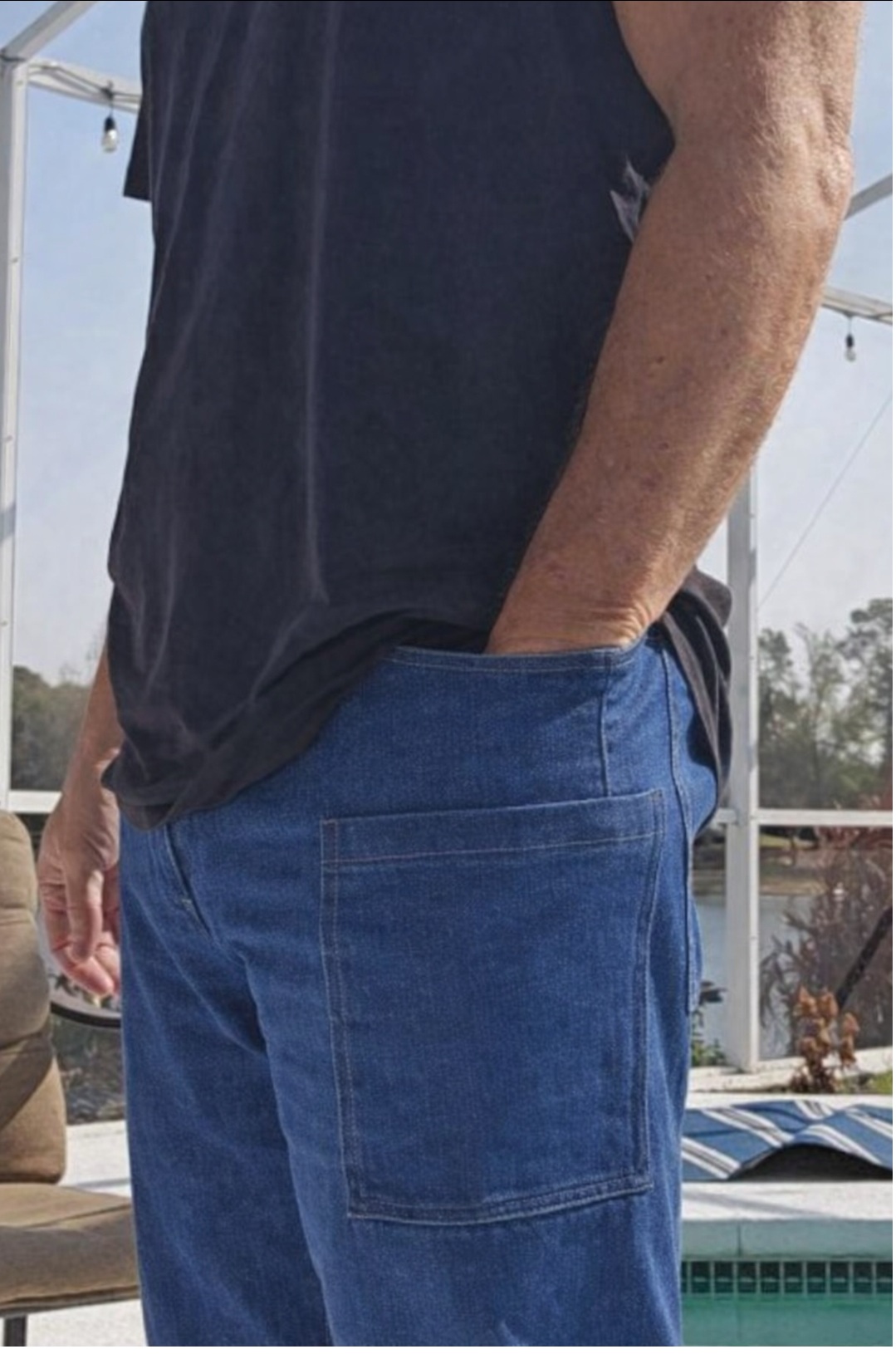
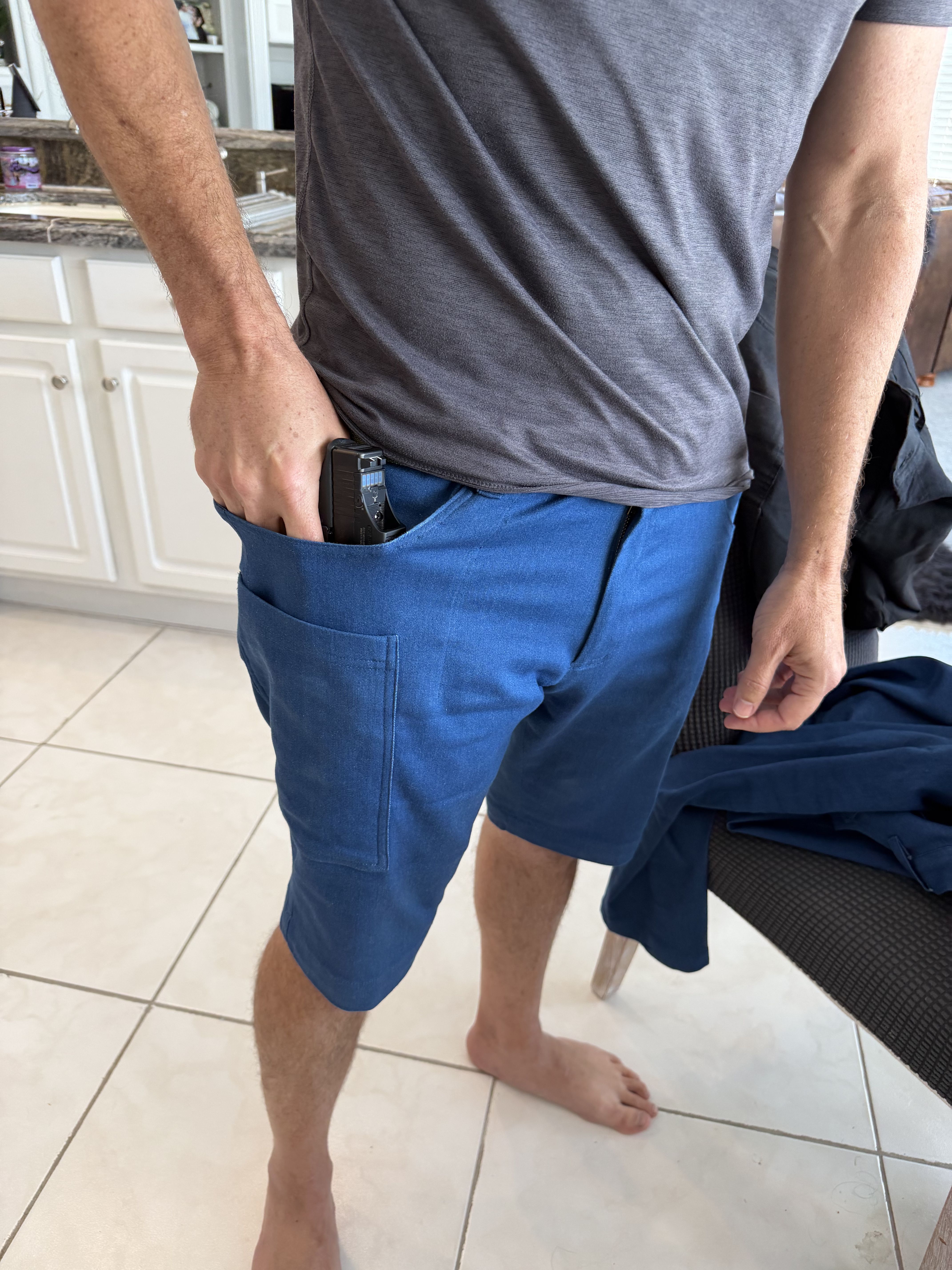
The outer thigh is outside the fold. When you sit, it doesn't compress. When you buckle a seatbelt, the belt crosses the torso — not the thigh. When you bend forward, the outer leg stays in roughly the same relationship to the rest of your body.
A pocket at the outer thigh carries through all of those positions without the adjustments, pressure points, or printing variability that waistband carry creates. You get in the car the same way you got out of it. You sit down the same way you stood up. The firearm is in the same place, in the same orientation, with no adjustment needed.
Carry That Disappears
The best carry system is the one you stop thinking about. When you're adjusting, shifting, and accommodating your setup throughout the day, it's not doing its job — regardless of how well it performs in a standing demonstration.
A system designed around real movement — sitting, driving, bending, walking — earns the right to be called everyday carry. Everything else is occasional carry with extra steps.