How Your Body Moves With a Firearm — And Why Most Carry Positions Fight It
Biomechanics is the study of how the body moves. Applied to concealed carry, it asks a question that almost nobody in the industry has bothered with: does this carry position work with how the human body moves, or against it?
The honest answer, for most traditional carry positions, is: against it.
The Body Is Not a Static Object
Most carry positions were designed for a standing person in a demonstration context. Real life involves sitting at a desk, getting in and out of a car, bending to pick something up, walking for extended periods, and doing all of that repeatedly over the course of a day.
Each of those movements changes what the body is doing — and what it's doing to anything attached to it. When you sit, your hip flexors engage, your abdomen folds, and fabric at your waistline is put under significant tension. A firearm at the waistband is pressed into your body by that tension. When you stand back up, everything releases and the firearm may have shifted.
When you walk, your hips rotate slightly with each step. The waistband rotates with them. A holster clipped to the waistband moves too — slightly, constantly, all day.
Where the Body Is Actually Stable
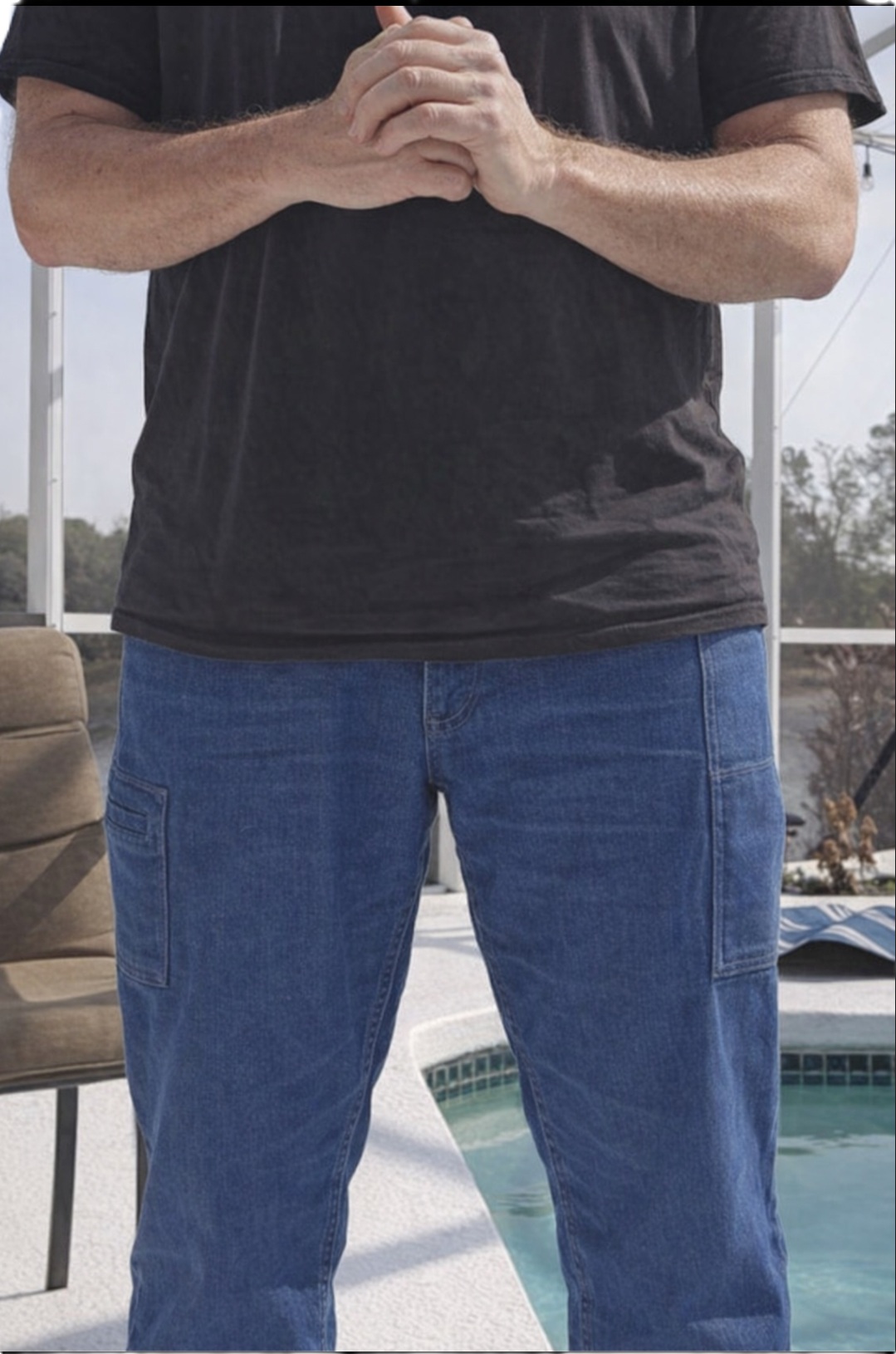
Not every part of the body moves the same way. The outer thigh has a much simpler movement pattern. It swings forward and back in a consistent arc with each step. It doesn't compress. It doesn't fold. The fabric over the outer thigh doesn't stretch and relax with every breath.
This stability is what makes the outer thigh a better anchor point for a carried object. A pocket at that location moves in a predictable, low-variability pattern. The firearm stays where you put it — in the same orientation — across sitting, standing, and walking.
The Hand Position Problem
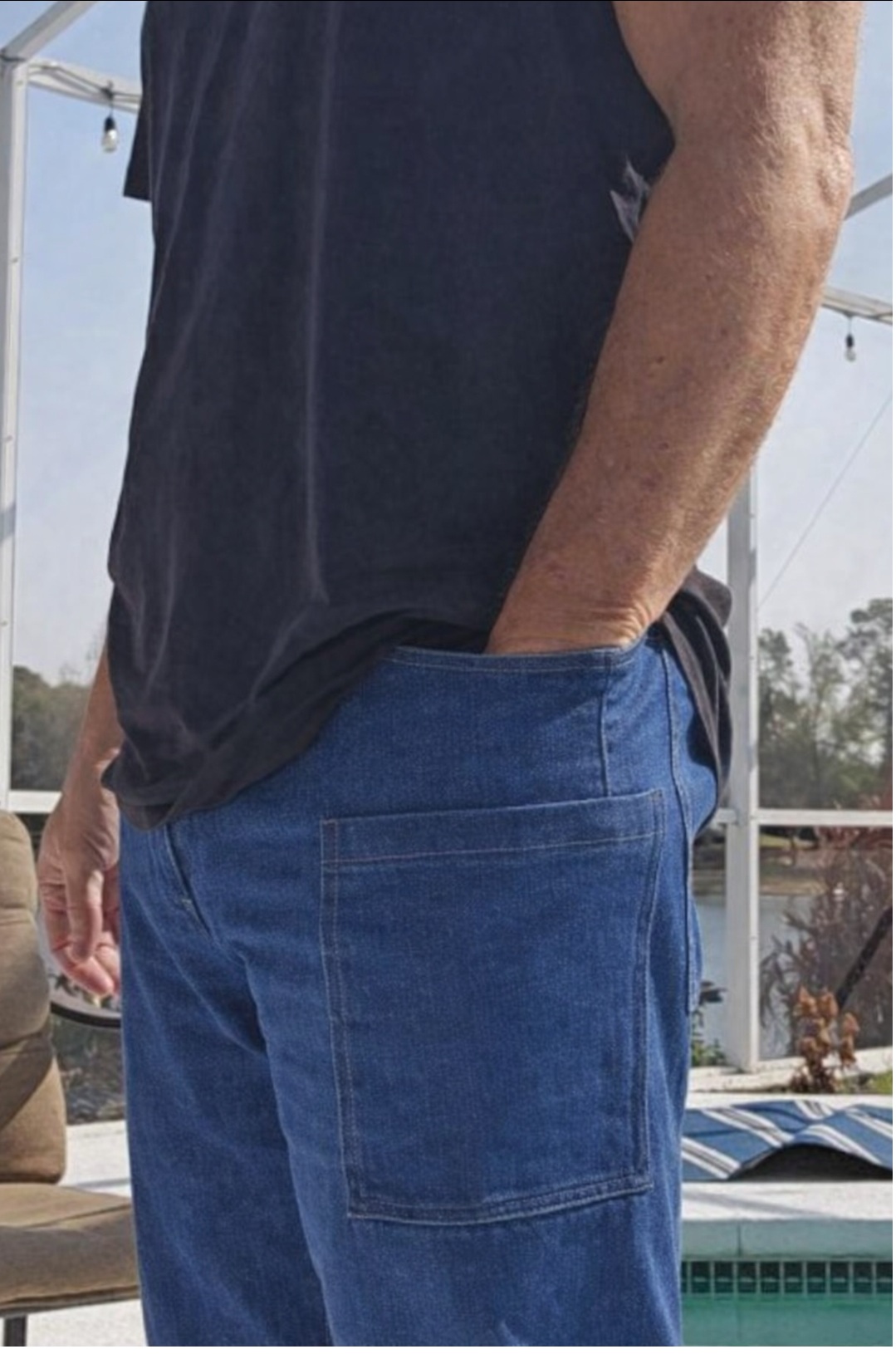
When your arm hangs naturally at your side, your hand rests at the outer thigh. That's the anatomically neutral position. Any carry position that requires you to reach away from that point — forward to a front pocket, across to a cross-draw, backward to small-of-back — is adding a movement the body doesn't make naturally at rest.
Side-leg carry positions the firearm exactly where the hand already is. Access starts from the neutral arm position, not from a deliberate reach.
Why This Matters for Everyday Carry
For most concealed carriers, the primary challenge isn't a high-stress draw under pressure. It's a more immediate problem: can you carry this thing comfortably for ten hours without thinking about it?
A carry position that fights the body's natural movement creates fatigue, pressure, and adjustment needs throughout the day. A position that works with the body's movement becomes something you stop noticing — which is exactly what everyday carry should be.
The goal isn't tactical perfection. The goal is to have the firearm with you, comfortably, on every ordinary day — so it's there on the one day when you might need it.