How Often Do Police Actually Draw Their Weapon?
Law enforcement officers go through extensive firearms training. They qualify regularly. They carry every day on duty. Their equipment is purpose-built for fast access under stress.
And a significant portion of them retire after 20-year careers having never fired their weapon outside of a training environment.
That fact says something important — not just about policing, but about what "being ready" actually means for civilian carriers.
What Studies Show
Research on law enforcement use-of-force incidents consistently shows that the majority of officers — in many departments, well over half — never discharge their weapon in the line of duty over the course of their careers. In lower-crime jurisdictions that number climbs considerably higher. Officers in departments that do see more use-of-force incidents typically experience one isolated event, if any, over a full career.
This isn't a criticism of law enforcement or their training. It reflects what police work actually looks like statistically — the vast majority of duty time involves no shooting incidents, even for officers working in environments where violence is a real occupational hazard.
Why This Matters for Civilian Carriers
Law enforcement officers operate in higher-risk environments than the average civilian. They respond to violent crimes in progress. They conduct traffic stops on unknown individuals. They enter locations where armed suspects may be present. Their baseline risk profile is meaningfully higher than a person who commutes, works a normal job, and runs everyday errands.
If a significant majority of people in a higher-risk professional role complete their entire careers without a shooting incident, the probability for a typical civilian carrier is lower still.
This is not an argument against carrying. It is an argument for being clear-eyed about what you're carrying for — and what your setup should actually prioritize.
The Tactical Mindset Mismatch
A significant portion of civilian carry culture imports its standards from law enforcement and military practice: fast draws, combat retention, training scenarios modeled on duty situations. This creates a mismatch between the actual risk profile of civilian carry and the gear and mindset being applied to it.
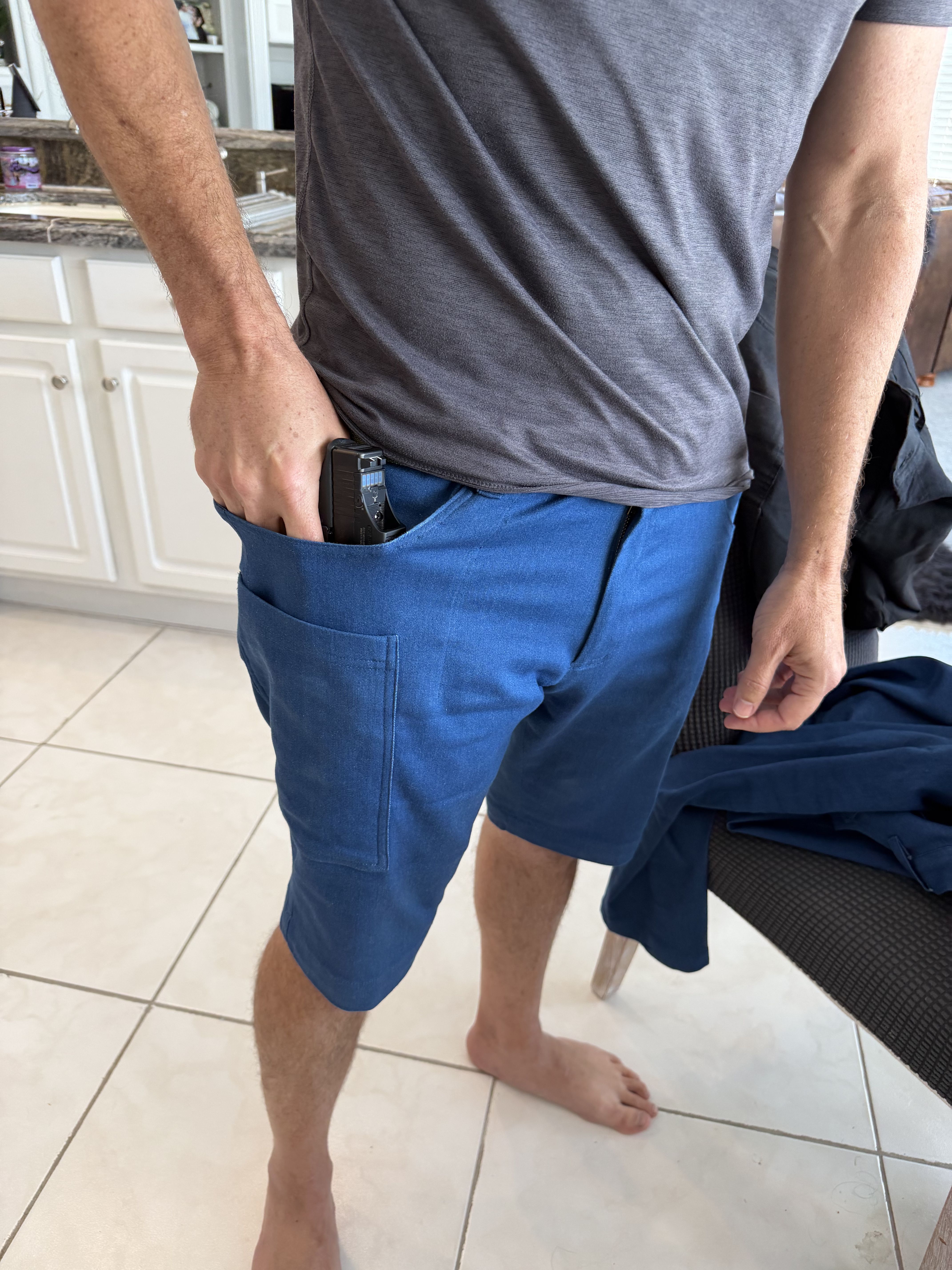
An officer who may draw infrequently still needs retention, quick access under stress, and equipment suited to a dynamic, unpredictable environment — because those situations are part of the job description. A civilian carrier faces a different risk profile and has a different primary challenge: carrying consistently, comfortably, and without the carry setup interfering with a normal civilian life.
What Actually Changes
When you recalibrate around realistic probability rather than worst-case scenarios, the priorities shift. A fraction-of-a-second faster draw time matters less than whether you'll actually have the firearm with you. Optimized retention hardware matters less than whether your carry setup is comfortable enough to wear every day for the next twenty years.
The officer who retires without ever drawing outside of training still benefited from carrying. They were prepared for something that didn't happen. That's the right call. The civilian carrier is in exactly the same position — prepared for something unlikely, for as long as they carry.
That kind of long-term, consistent preparedness requires a comfortable, sustainable setup. Carry for the life you actually have, not the scenario from the training video.