Most Civilians Will Never Draw Their Weapon. Carry Accordingly.
Here is an uncomfortable truth that most of the concealed carry industry would rather not say out loud:
The overwhelming majority of people who carry a firearm every day for their entire adult lives will never draw it outside of a training range.
Not "might never have to." Never will.
That's not pessimism. That's probability. And it has major implications for how you think about your carry setup.
What the Numbers Actually Say
Estimates of annual defensive gun uses in the United States vary widely depending on the study, but even under generous assumptions, the probability of any individual carrier facing a situation requiring a draw in a given year is very small. Over a 20 or 30-year carrying lifetime, most people will never face a situation where drawing is the right response.
This is not an argument against carrying. It is an argument for thinking clearly about what "being prepared" actually means — and what, therefore, your carry setup should actually be optimized for.
What "Prepared" Actually Means
If the primary scenario you're preparing for is a high-stress defensive encounter requiring a fast draw under pressure — and that scenario has a very low probability of occurring in your lifetime — then optimizing your entire carry setup around that scenario doesn't make rational sense.
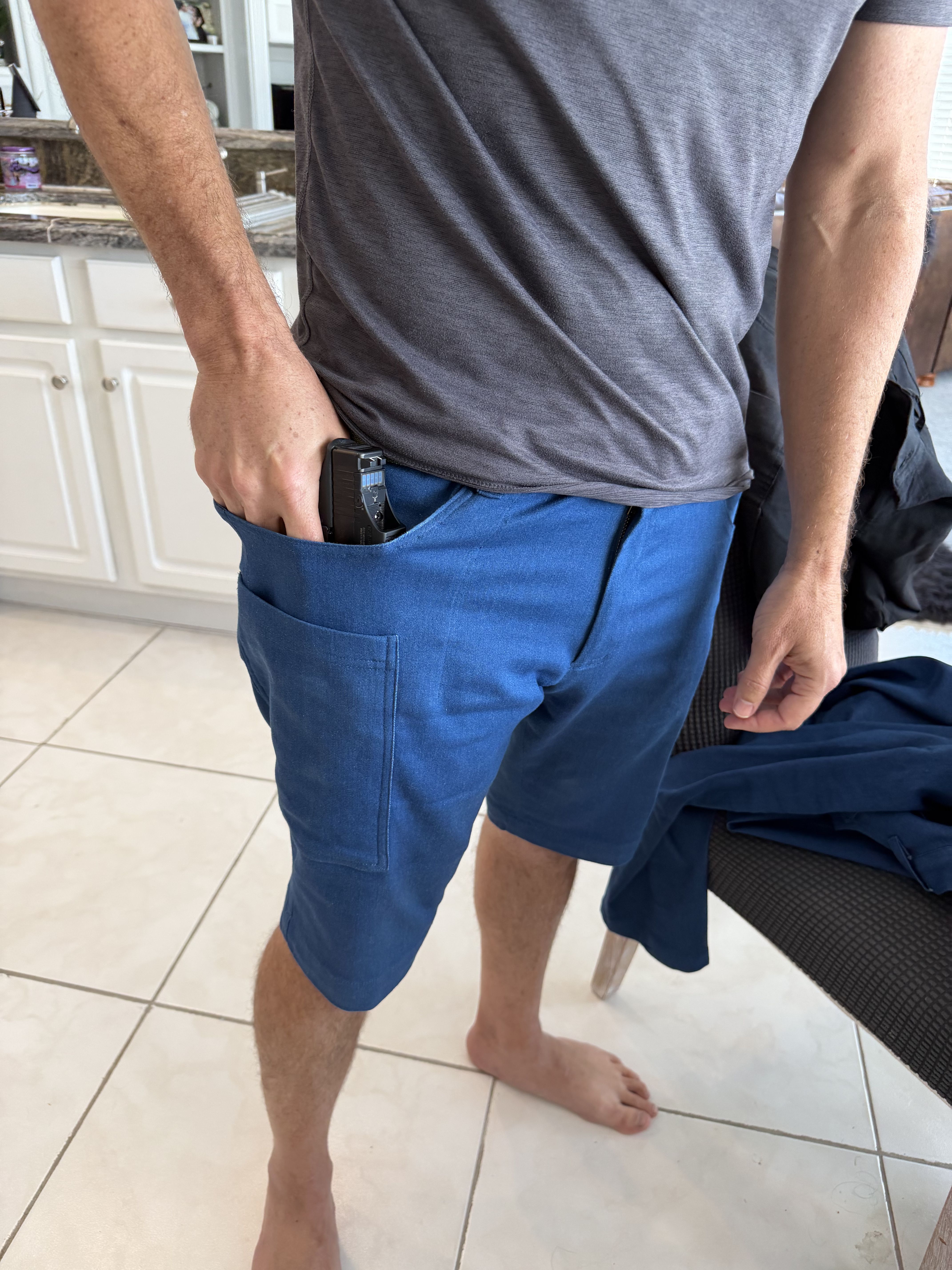
What makes sense is optimizing for the thing that will definitely happen: carrying a firearm every single day for years. That means comfort. That means a setup that doesn't make you want to leave it home on warm days, long drives, or casual outings.
A firearm you have with you on the day something does happen is worth infinitely more than a theoretically faster setup that stayed home because it was too uncomfortable to bother with.
The Gear Industry's Incentive Problem
The concealed carry gear industry has a strong incentive to sell you on the tactical scenario. Faster draw times. Better retention. Optimized cant angles. The language of readiness sells products.
It also creates a mindset that treats everyday carry like preparation for combat — when in reality, for most people, everyday carry is preparation for a very unlikely event that will never require combat-level optimization.
The civilian carrier isn't a soldier or a law enforcement officer. They're a person who would like to have options in the small chance that something goes very wrong. That's a completely different requirement than what most carry gear is designed around.
Carry for the Life You Actually Have
The most practical carry setup is the one you'll actually use — not the one with the fastest draw time in a standing demonstration, but the one that's comfortable enough to wear to work, to the grocery store, to your kid's school pickup, and to keep on all day without thinking about it.
Comfort is not a compromise on preparedness. It's the thing that makes preparedness real. An uncomfortable carry setup is a setup you'll skip on the days that feel low-stakes — which is every day until the one day it isn't.
Carry accordingly.