Concealed Carry at the Office — How to Dress Like You're Not Carrying
The office is where concealed carry gets complicated fast.
Range clothes work for range carry. Casual clothes with an untucked flannel work for weekend carry. But business casual — tucked shirts, dress trousers, fitted clothing that has to look professional — creates a set of constraints that most carry setups weren't designed to handle.
If you carry at work, you've probably made compromises. Here's an honest look at why the standard options fall short and what actually solves the problem.
Why Business Casual Is Hard
Three things make office environments specifically challenging for concealed carry:
Tucked shirts. Most IWB holsters don't work with a tucked shirt without a dedicated tuckable setup that adds hardware and complexity. Even tuckable holsters leave clips visible at the waistband — something that reads oddly in a professional setting where nobody else has visible hardware on their belt.
Fitted clothing. Dress trousers and business casual shirts are cut closer to the body than casual wear. There's less fabric to hide a grip outline. A slight bulge that's invisible under a loose flannel is visible under a fitted dress shirt.
Sitting all day. Office work means extended seated time — at a desk, in meetings, in conference rooms. Every carry position that creates discomfort when seated becomes a genuine problem over an eight-hour workday.
What Most People Try
Shoulder holster — works with a jacket, completely impractical without one. The moment you take your jacket off at your desk, which most people do, a shoulder rig is visible. Not a real daily option for most office environments.
Ankle carry — genuinely conceals well in trousers. Access is the problem: from a seated position at a desk, getting to an ankle holster is a significant, slow, conspicuous movement. It also requires a full day of extra weight on one ankle, which gets uncomfortable.
Leaving it in the car — common, understandable, and not actually carry. A firearm locked in a vehicle in a parking garage is not a self-defense tool. It's a stored object that requires leaving the building to access.
What the Office Carry Problem Actually Requires
The carry system that works at the office needs to satisfy a specific set of conditions: no visible hardware at the waistband, no bulge under a fitted shirt, comfortable seated for hours, accessible without a conspicuous movement, and compatible with professional-looking clothing that doesn't read as tactical.
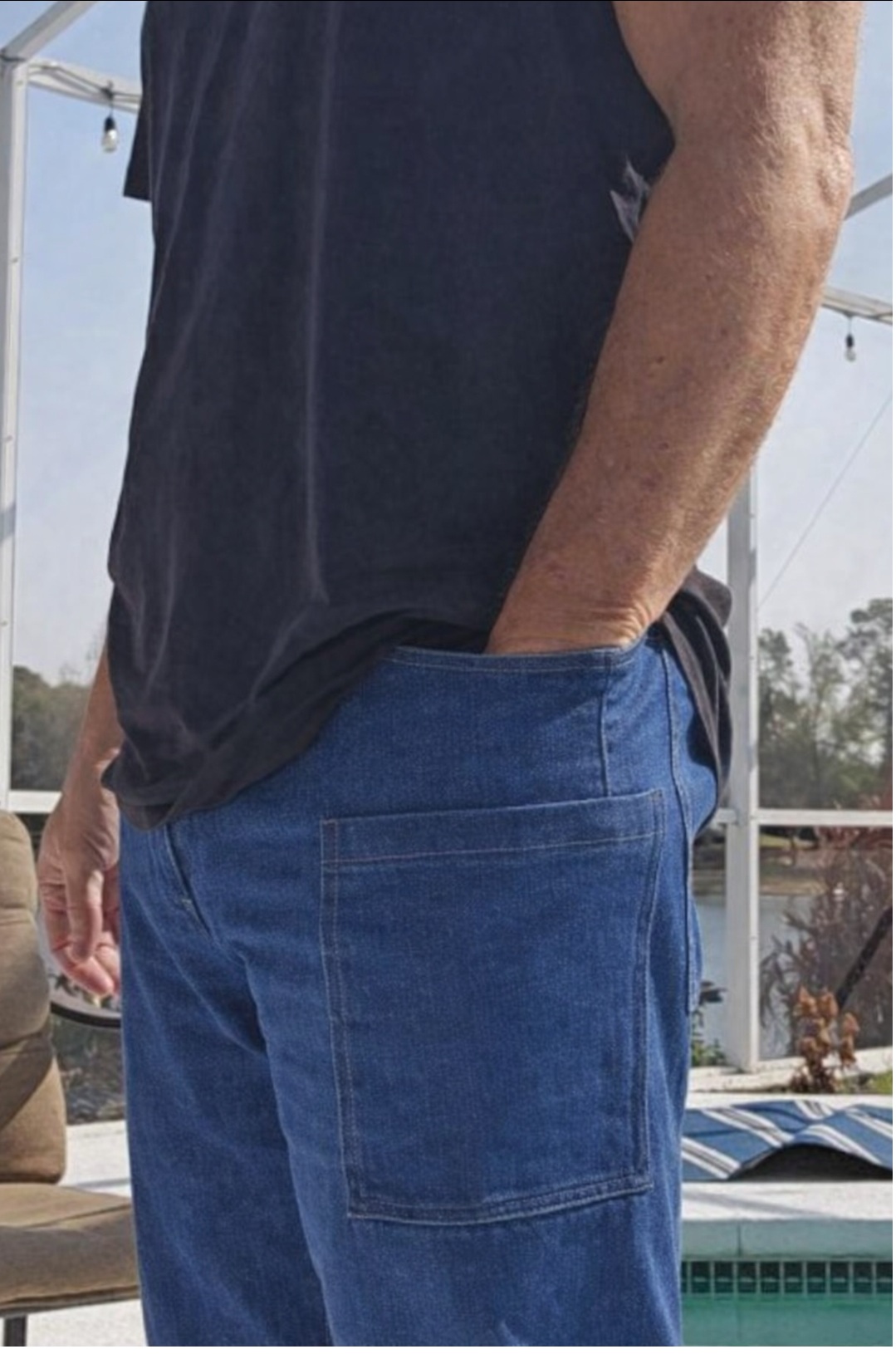
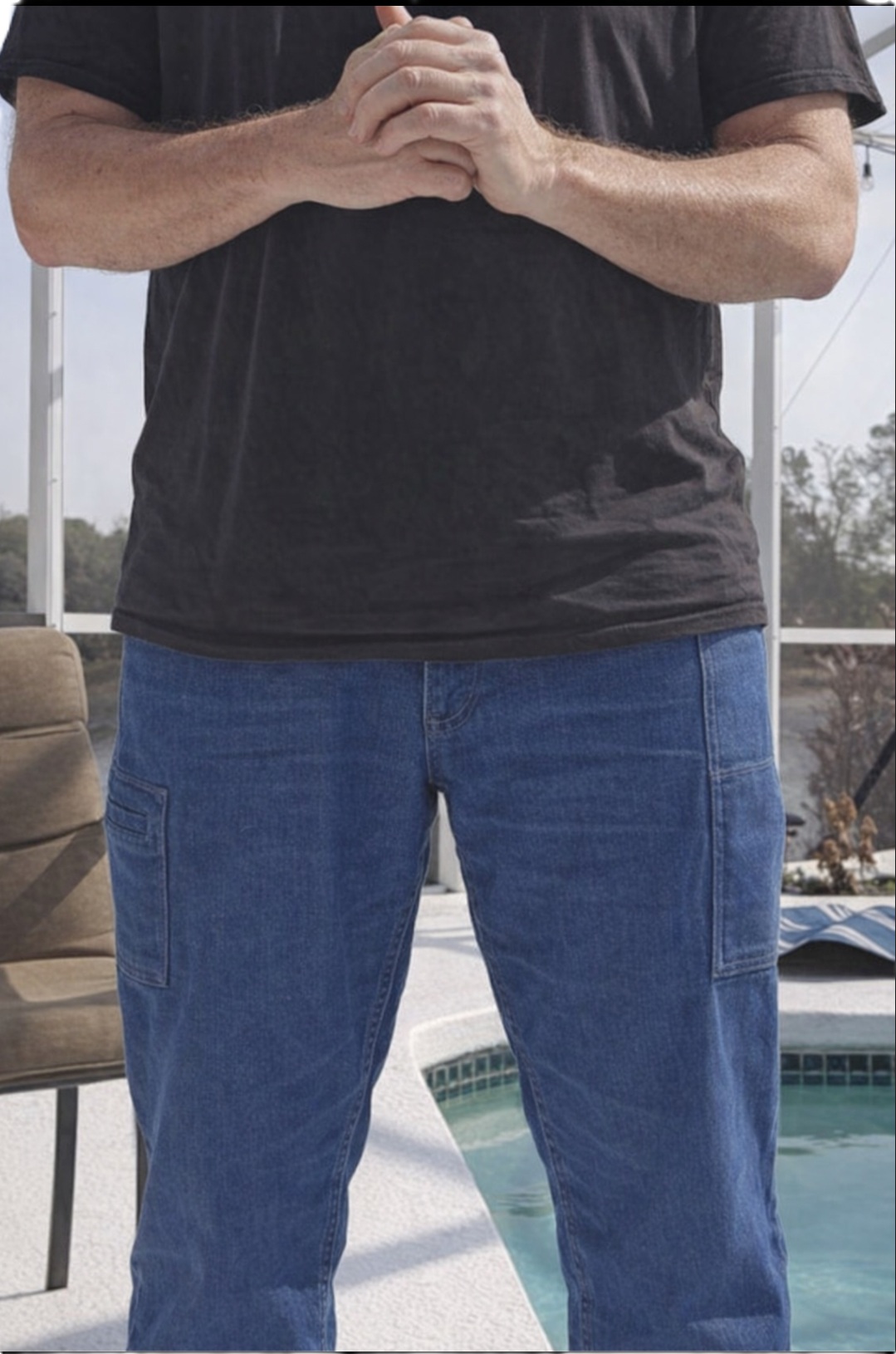
A pocket along the outer seam of the leg in a pair of jeans or dress-adjacent trousers satisfies all of those. There's no hardware at the waistband. The pocket sits along the seam of the leg — nothing protrudes into the shirt. Seated comfort is unchanged because the outer thigh doesn't fold. Access from a seated position requires the same motion as standing — hand drops to the outer leg.
Looking the Part Without Giving It Away
The goal in an office environment is carry that's invisible not just to strangers but to colleagues who see you every day at close range. That standard is higher than most carry situations demand — and it's achievable only if the carry system doesn't create any external indication at all.
No clip. No outline at the hip. No shirt that won't tuck because of what's underneath. Just a normal pair of jeans or dark trousers, a tucked shirt, and a carry system that's entirely contained within the garment — invisible because there's genuinely nothing to see.