Pocket Architecture Explained: The Engineering Behind Gunpant's Carry System
A pocket is not a carry system. A pocket is a bag attached to clothing. It holds objects. It doesn't position them, orient them, stabilize them, or account for how they behave under the weight and movement of daily use.
Gunpant's pocket is not a standard pocket. It's a purpose-built carry architecture with four specific engineering elements, each solving a problem that an ordinary pocket ignores.
Element 1: Side-Leg Placement
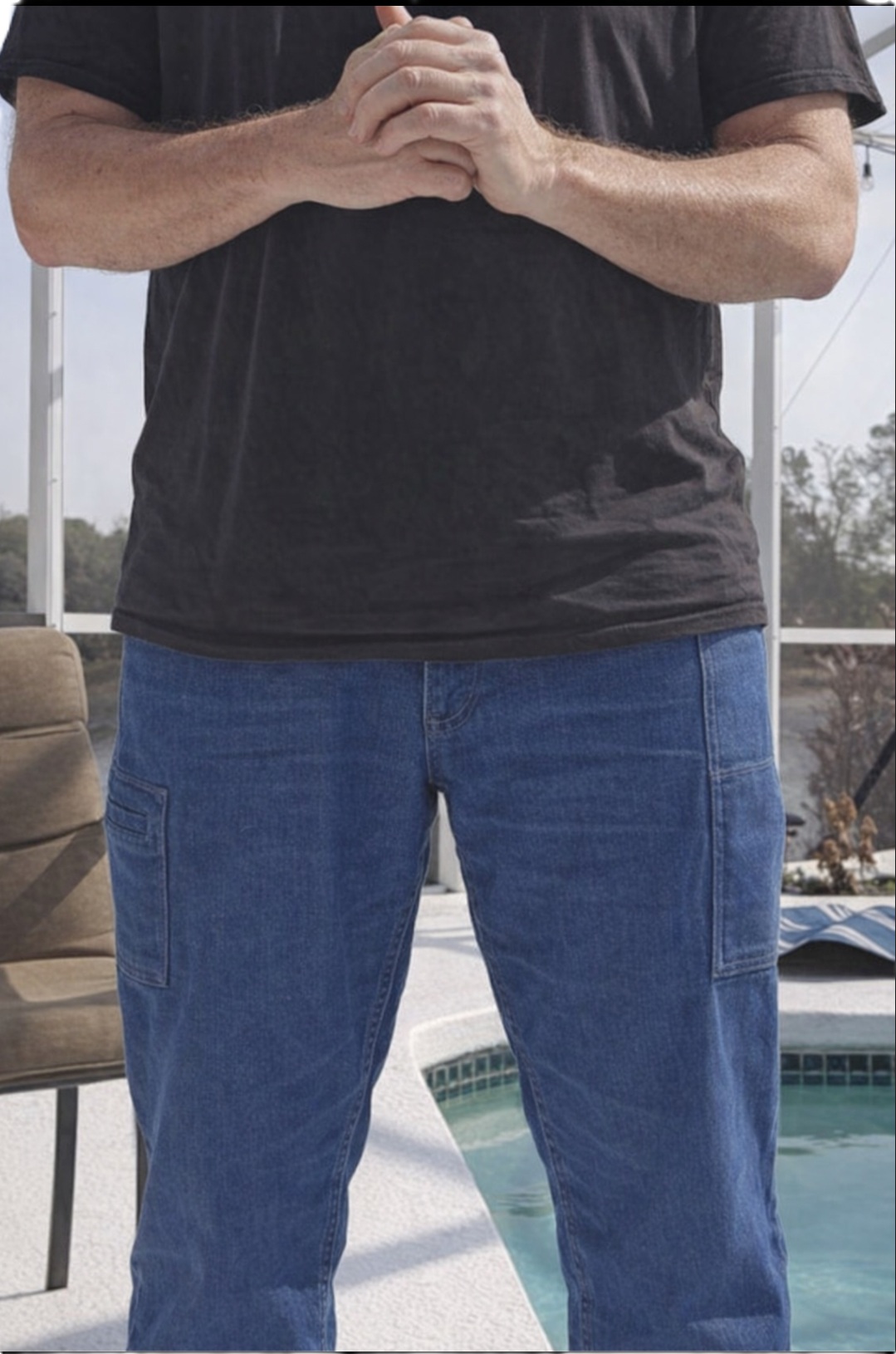
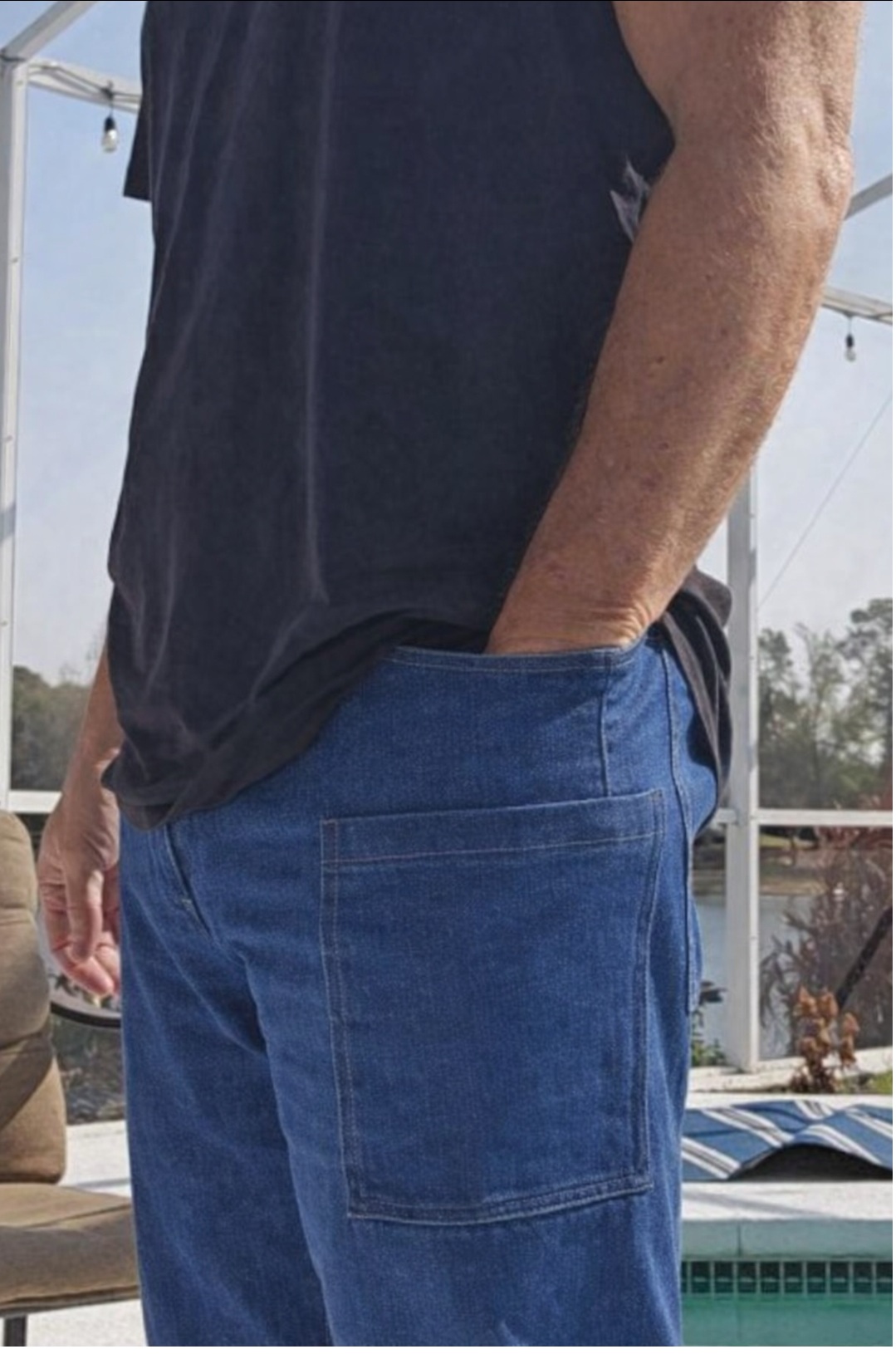
The pocket is positioned along the outer seam of the leg — not the front pocket position, not the waistband, not a cargo pocket on the thigh face. The outer seam places the pocket at the lateral thigh, where the body's movement is most predictable and least compressive.
This placement also aligns the pocket opening with the natural resting position of the hand — the arm hanging straight, the hand at the outer thigh. Access doesn't require reaching forward, crossing the body, or moving the arm to an unnatural position.
Element 2: The 7-Inch Opening
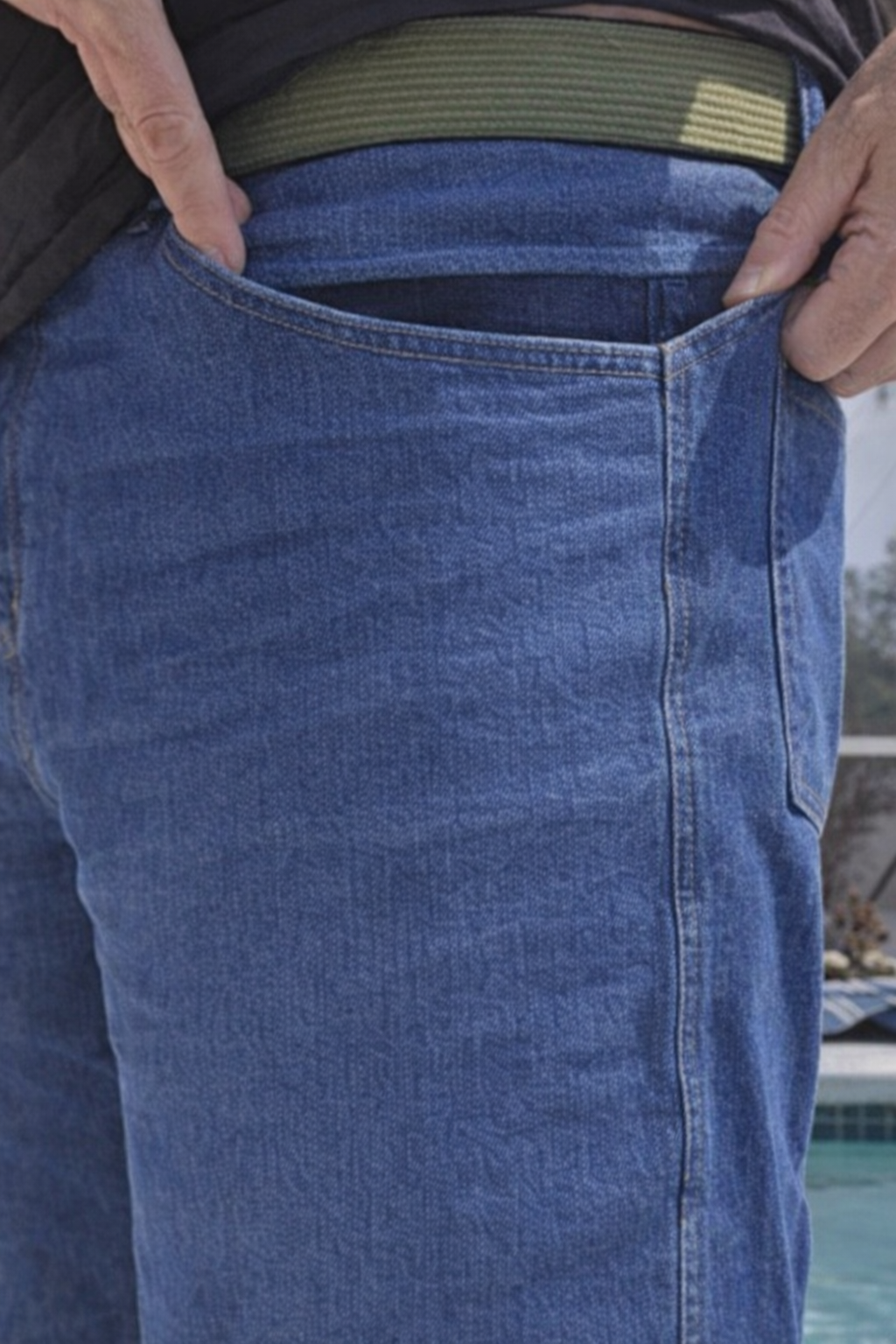
Standard pocket openings run 3–4 inches. That's enough for a hand, not a hand around a grip. Gunpant's pocket opening is approximately 7 inches — wide enough to accommodate a natural hand entry without fabric interference or the need to search for the grip.
The opening is positioned so the hand enters from above at a slight angle, following the natural motion of the arm dropping to the side. The stretch in the denim accommodates different hand sizes and grip profiles without resistance.
Element 3: Stitched-In Stabilization
An unstabilized pocket hangs freely from its top seam. Under the weight of a firearm, it swings, collapses, and rotates. The firearm shifts with it — printing more, sitting lower, and requiring manual adjustment to reorient after movement.
Gunpant's pocket is stitched directly into the pant leg at multiple attachment points. It cannot swing or collapse independently of the garment. The pocket and the pant move together — which means the firearm moves with the leg predictably, in the same arc — rather than responding to its own weight dynamics.
Element 4: Four-Point Catch Geometry
This is the element that makes the system work as carry architecture rather than just a large pocket. Four internal stitched reference points create a geometry that guides a firearm into a consistent orientation each time it's placed in the pocket.
The geometry is designed around the profile of a compact or mid-size carry handgun: contact along the upper barrel, along the lower barrel, at the front of the trigger guard, and beneath the trigger guard. Together these four points catch the firearm and hold it in a repeatable position — same height, same angle, same orientation — whether the carrier is standing, sitting, or has been moving for hours.
For this geometry to function correctly, the area in front of the trigger guard and along the lower barrel must be clear of accessories. Weapon lights and rail-mounted lasers prevent proper seating. Red-dot optics can be compatible if mounted at the rear of the slide, entirely behind the trigger guard.
What This Architecture Produces
Together, these four elements create a pocket that behaves more like a holster than a pocket — without being a holster, without requiring separate equipment, and without adding visible hardware or bulk to the outside of the garment.
The firearm is positioned where you expect it. It stays in that position. Access follows a consistent path. And the whole system is inside a pair of jeans that look entirely normal from the outside.
That's pocket architecture. That's what makes it different from a bigger front pocket.